Blog / · 6 min read
How to scale Facebook ads without wrecking your CPA
 Veikka Grundström Founder, upload.ad
On this page
Every media buyer has watched it happen: an ad set hits a great CPA at $200 a day, the budget goes to $1,000, and within a week cost per purchase is up 60%. No trick keeps CPA flat while you scale: cost usually rises as spend rises, because each extra dollar reaches people who are a little less likely to buy. The job is to grow spend while keeping that rise inside your margins.
Here is how experienced buyers scale on Meta in 2026: the budget moves, the structure moves, the cost controls, and the constraint most accounts actually hit first.
Vertical vs horizontal scaling
There are two ways to spend more.
Vertical scaling means raising the budget on what already works: the same campaign, the same ad set, more money. It keeps the learning the ad set has built up and is the simplest move.
Horizontal scaling means adding new places to spend: new ad sets, new audiences, new countries, new placements, or new campaigns with fresh creative. It spreads spend across more pockets of demand instead of pushing one pocket harder.
| Approach | What changes | Good for | Main risk |
|---|---|---|---|
| Vertical | Budget on an existing campaign or ad set | Proven winners with room to grow | Rising CPA, learning resets on big jumps |
| Horizontal | New ad sets, geos, audiences, or creatives | Winners that have saturated | Splitting events, more ad sets in learning |
In practice you do both. Scale vertically until the cost curve bends, then scale horizontally to find new room.
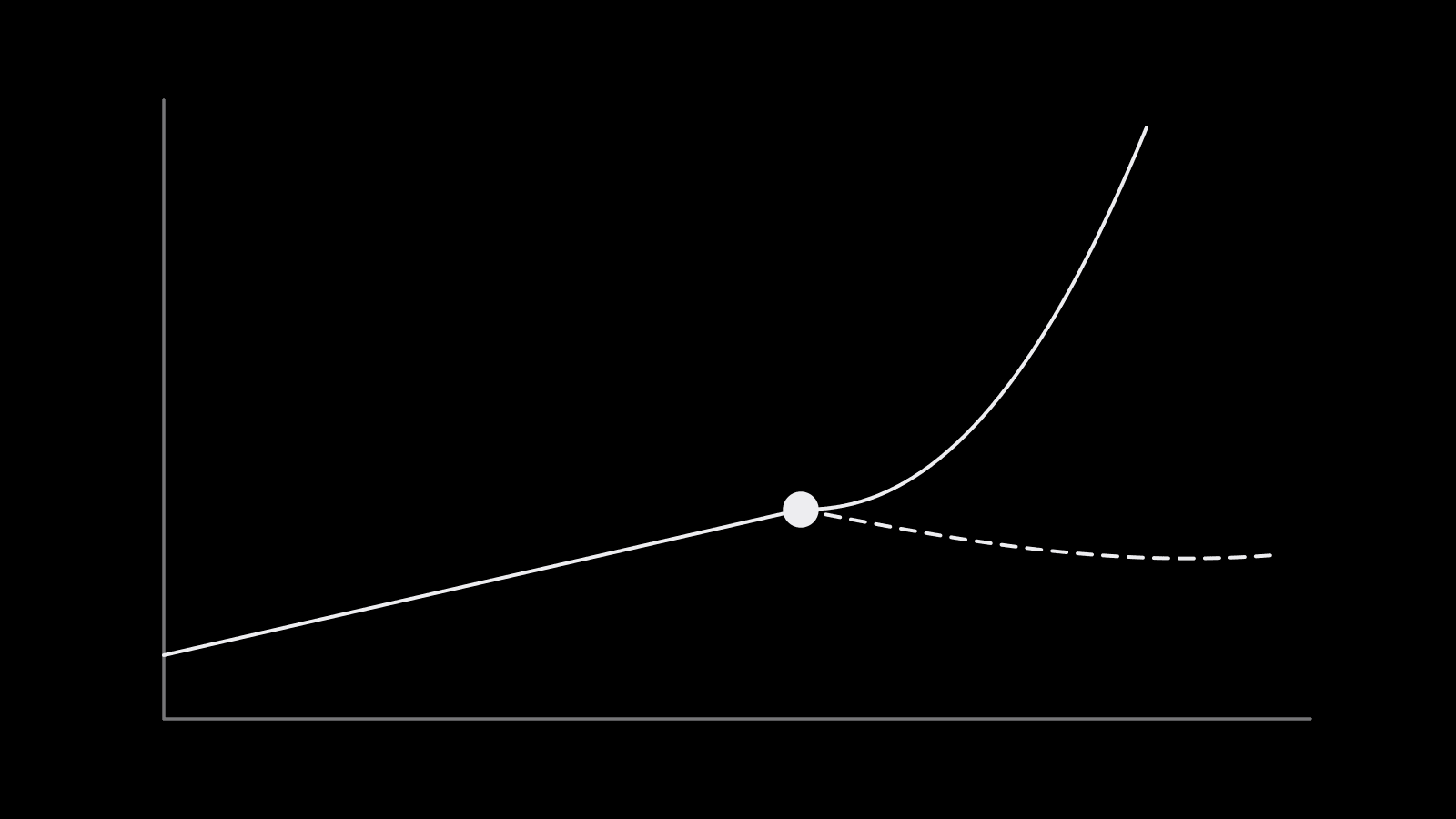
Vertical scaling: pacing budget increases
Large budget changes are one of the edits that can send an ad set back into the learning phase. Meta does not publish an exact threshold. The working rule of thumb most buyers use is to raise budget by roughly 20% at a time and wait a few days between moves, so the system can adjust without a full reset.
A practical cadence:
- Wait until the ad set has exited learning and CPA has been stable for several days.
- Raise budget by about 15% to 25%.
- Hold for two to three days. Judge the change on at least a few days of results, not one.
- If CPA holds within your target, repeat. If it rises past target, hold or step back.
This is slow on purpose. Going from $100 to $1,000 a day at 20% steps takes roughly two weeks of increases. If you need to move faster, a bigger jump is an option, but expect some volatility and judge it over a week.
Budgets on Advantage campaign budget (campaign-level budgets) tend to absorb increases more smoothly than individual ad set budgets, because Meta can shift spend to whichever ad set has room. See ABO vs CBO for when each structure fits.
Horizontal scaling and duplicating
Duplicating a winning ad set is the classic horizontal move. It works, with caveats:
- A duplicate starts learning from scratch. It does not inherit the original's delivery history, though the account's overall data still helps.
- Duplicates can compete with each other. Two identical ad sets targeting the same broad audience end up in the same auctions. Meta prevents the same advertiser's ad sets from bidding against each other directly, but in practice only one tends to win delivery, so the other underspends.
- More ad sets means fewer events each. Five duplicates at $200 a day each may all sit in learning limited, when one ad set at $1,000 would exit comfortably.
Horizontal scaling works best when the new ad set genuinely reaches someone new: a new country, a new offer angle, a different product line, or new creative concepts aimed at a different buyer. Duplicating the same thing with the same audience is mostly a way to reset learning.
For ecommerce, Advantage+ sales campaigns are another form of horizontal scaling: one consolidated campaign where Meta handles audience and placement, and the buyer's main input is creative.
Creative volume is the real constraint
Once targeting is broad and budgets are consolidated, most accounts stop scaling for one reason: they run out of creative that works. More spend means higher frequency on the same people and faster creative fatigue. The auction gets more expensive for tired ads, and CPA rises.
Accounts that scale well tend to share a few habits:
- A steady testing pipeline. New concepts go into a separate testing campaign every week, and winners graduate into the scaling campaign. The creative testing framework covers the structure.
- Concept variety over variations. Five colors of the same ad reach the same person the same way. Different angles, formats, and creators reach new people. Mixing UGC, statics, and product demos widens the pool.
- Iteration on winners. New hooks on a proven body are the cheapest way to extend a winner's life; hook rate and hold rate tell you which part to rewrite.
If your budget doubles and your weekly creative output stays the same, expect CPA to rise. Scaling spend without scaling creative is the most common reason a winning account stalls.
Cost controls while scaling
On highest volume, Meta spends the full budget whatever results cost. That is fine at low spend and risky at high spend, because the marginal results get expensive. Two ways to keep control:
- Cost per result goal (formerly cost cap): set it near your proven CPA and raise budget more aggressively. If Meta cannot find results at that cost, it spends less rather than overpaying. Expect some days to underspend.
- ROAS goal: the same idea for value-based optimization, when profit depends on order value.
A common pattern is to keep one highest volume campaign as the steady base and scale a second campaign on a cost per result goal with a generous budget, letting the goal decide how much it can spend. The bid strategies guide covers each option and how to avoid throttling.
When to stop scaling
Set a ceiling before you start: the highest CPA or lowest ROAS at which the extra spend still makes money. Good ROAS benchmarks walks through breakeven math. Judge on blended results across the account, not only the ad set you scaled, because more prospecting spend often lifts retargeting and organic sales too, and some of the ad set's reported conversions would have happened anyway.
Frequently asked questions
How much should I increase my Facebook ad budget when scaling?
A common rule of thumb is about 20% at a time, every two to three days, once the ad set is stable and out of learning. Meta does not publish an exact threshold, so larger increases are possible but can cause volatility or restart learning.
Is it better to duplicate an ad set or increase the budget?
Increase the budget first, because the ad set keeps its learning. Duplicate when you want to reach a genuinely new audience, country, or angle. Duplicates start learning from scratch and can compete with the original for the same people.
Why does CPA go up when I scale Facebook ads?
At higher budgets Meta has to reach people who are less likely to convert, so each additional result costs more. Higher frequency and creative fatigue add to it. Some rise is normal; the question is whether it stays inside your margins.
What is horizontal scaling in Facebook ads?
Horizontal scaling means growing spend by adding new ad sets, audiences, countries, placements, or creative concepts, instead of raising the budget on existing ones. It finds new demand once the original winners are saturated.
Can you scale Facebook ads with a small budget?
Yes, gradually. Consolidate into fewer ad sets so each gets enough conversions to exit learning, then raise budget in steps as results hold. Creative testing matters even more at small budgets, since each winner has to carry more of the spend.
Scaling comes down to shipping more good creative every week. upload.ad keeps your team's creative reviewed, organized, and uploaded straight into Meta and TikTok ad accounts. Start free.
Veikka Grundström, Founder
I build upload.ad, the creative library and review workflow media buying teams use to get ads from edit to live on Meta and TikTok. I write about the parts of that job that waste the most time: creative testing, platform specs, review approvals, and the API behaviour nobody documents properly.