Blog / · 6 min read
Facebook bid strategies: which one to use and when
 Veikka Grundström Founder, upload.ad
On this page
Most Meta ad sets run on the default bid strategy because nobody changed it, and that is often the right call. The trouble starts when a buyer switches to a cost control to "protect CPA" and the ad set stops spending, or leaves the default on while scaling and watches cost per purchase drift up. Bid strategy is a trade between volume and cost control, and each option makes that trade differently.
Here is what each Facebook bid strategy actually does, when it fits, and how to avoid throttling your own delivery.
The bid strategies Meta offers
Meta has renamed these several times, which is why guides disagree. The current names in Ads Manager, with the older names you will still hear:
| Bid strategy | Older name | What you set | What Meta does |
|---|---|---|---|
| Highest volume | Lowest cost | Budget only | Spends the budget to get as many results as possible |
| Highest value | Highest value (value optimization) | Budget only | Spends the budget to get as much conversion value as possible |
| Cost per result goal | Cost cap | Target average cost | Aims to keep average cost per result around your goal |
| ROAS goal | Minimum ROAS | Target ROAS | Aims to keep return on ad spend around or above your goal |
| Bid cap | Bid cap | Maximum auction bid | Never bids above your cap in any single auction |
The first two are spend-based: Meta tries to spend the whole budget. Cost per result goal and ROAS goal are goal-based: Meta spends only as much as it can while tracking the goal. Bid cap is manual: you control the bid itself.
Highest volume and highest value
This is the default and the right starting point for most new campaigns. Meta spends your budget and finds the cheapest results available at that spend level.
Use it when:
- You are launching and have no reliable CPA history yet
- You need the ad set to exit the learning phase quickly
- Budget is the constraint, not efficiency
The catch: there is no ceiling. As you raise budget, Meta moves into progressively more expensive results, so average cost per result tends to rise as spend rises. Highest value works the same way but optimizes for purchase value, which suits catalogs with a wide price range.
Cost per result goal
You give Meta a target average cost per result, and it tries to get as many results as possible while staying around that number. Some individual results will cost more and some less; the goal is about the average over time.
Use it when:
- You have a proven CPA and want to scale spend without letting cost per result run away
- You would rather spend less than spend at a bad CPA
- You run a budget large enough that the goal, not the budget, should decide spend
Set the goal from real data: your actual trailing CPA, or slightly above it. A goal well below what the account currently achieves is the most common reason ad sets under this strategy barely spend. Meta's guidance also suggests keeping the daily budget comfortably above the goal (their best-practice page recommends a multiple of it), so the system has room to find results.
ROAS goal
The value-based version of a cost goal. You set a target return (for example 2.5, meaning $2.50 of tracked purchase value per $1 spent) and Meta bids to hit it. It requires value optimization, so your pixel and Conversions API setup must pass accurate purchase values.
Use it when:
- Order values vary a lot and profit depends on ROAS rather than CPA
- You have enough purchase volume with values for Meta to model them
- You know your breakeven ROAS; see good ROAS benchmarks for how to work it out
Remember that ROAS in Ads Manager depends on your attribution setting. Set the goal against the same window you report on.
Bid cap
Bid cap limits the maximum Meta bids in each individual auction. It is not a CPA target. Your resulting cost per result can land well below or above the cap number, because cost per result also depends on conversion rate.
Use it when:
- You have a lot of data and a mature account
- You want hard control over what you pay per auction, for example during expensive seasonal peaks
- You are comfortable monitoring daily and adjusting often
Bid cap gives the most control and the most ways to break delivery. Set too low, the ad set wins almost no auctions. Many buyers who use it run several ad sets with different caps and let the results show where the auction clears.
Throttling: when cost controls stop spend
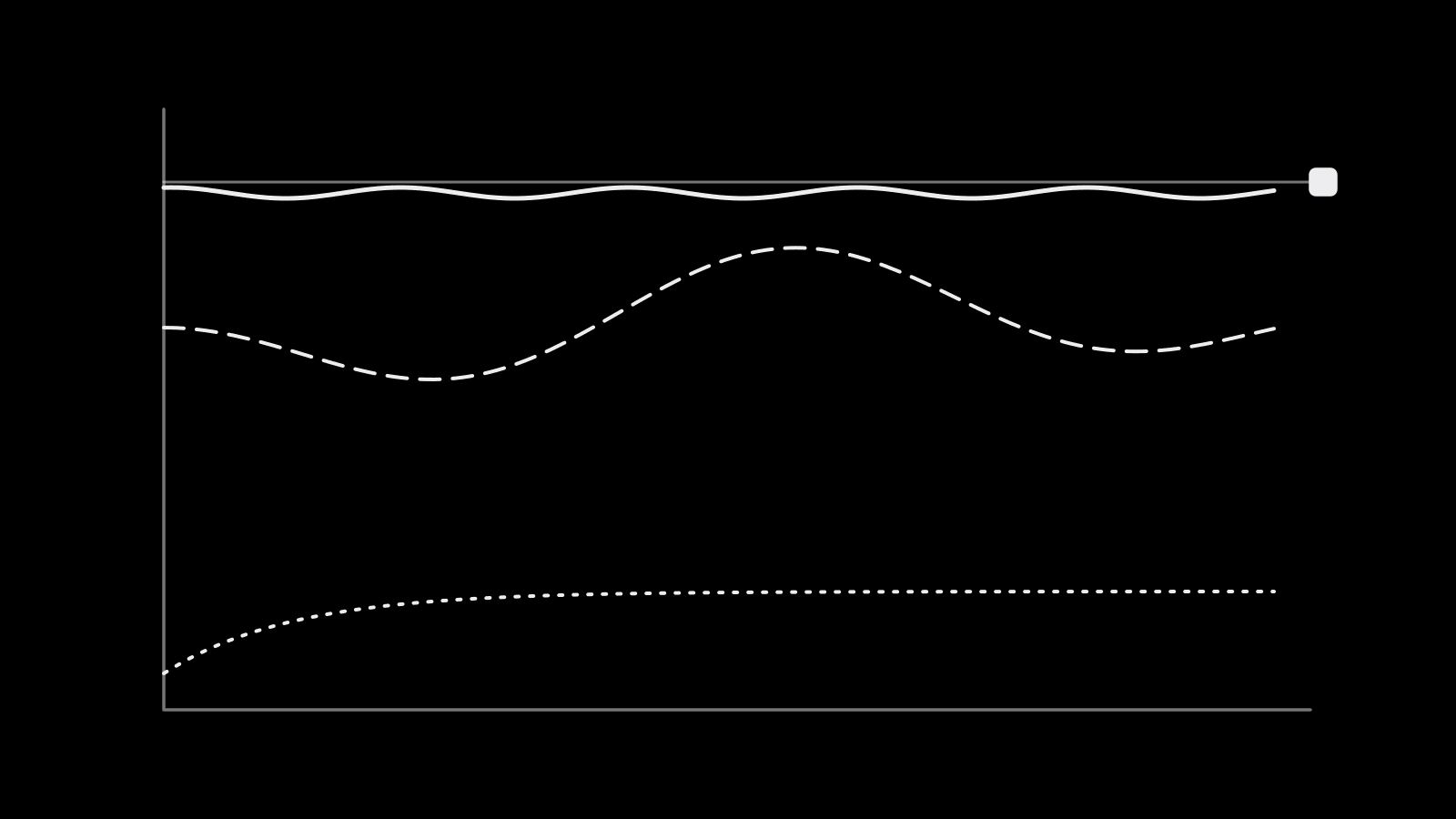
Goal-based strategies and bid caps trade volume for control. When the auction cannot deliver results at your target, Meta spends less, sometimes almost nothing. That is the strategy working as designed, though it looks like a bug. If you see it, check in this order:
- Is the target realistic? Compare it with your last 14 to 30 days on highest volume. A goal 30% under actual performance will throttle.
- Is the audience too narrow? Cost controls need room to be selective. Broad targeting gives them that room; see broad targeting vs lookalikes.
- Is the creative tired? Worse engagement raises the cost of every result, which pushes delivery below your goal. Creative fatigue often shows up first as a cost-capped ad set that stops spending.
- Did you just change the goal? Bid strategy changes are significant edits and restart learning.
For a broader checklist when spend drops, see Facebook ads not spending.
Choosing a bid strategy
| Situation | Start with |
|---|---|
| New campaign, new offer, or little conversion data | Highest volume |
| Ecommerce with varied order values, good value data | Highest value |
| Proven CPA, scaling budget, efficiency matters | Cost per result goal |
| Profit tied to ROAS, reliable purchase values | ROAS goal |
| Mature account, hands-on buyer, expensive peak | Bid cap |
A common progression: launch on highest volume, learn the real CPA, then move scaling ad sets to a cost per result goal set near that number. Bid strategies can be set at the ad set level, or at the campaign level when you use Advantage campaign budget; ABO vs CBO covers the budget side of that choice.
Frequently asked questions
What is the best bid strategy for Facebook ads?
Highest volume for most new campaigns, because it spends reliably and exits learning fastest. Once you know your real CPA, a cost per result goal usually gives better efficiency while scaling. There is no single best strategy; it depends on data volume and whether volume or cost matters more.
What is the difference between cost cap and bid cap?
Cost cap, now called cost per result goal, targets your average cost per result over time. Bid cap limits the maximum bid in each individual auction. Cost per result goal is easier to manage; bid cap gives tighter control but throttles delivery more easily.
Why is my cost cap ad set not spending?
Usually the goal is below what the auction can deliver for your audience and creative. Raise the goal toward your recent actual CPA, broaden targeting, or refresh creative. Goal-based strategies spend less rather than exceed your target.
Does changing bid strategy reset the learning phase?
Yes. Meta treats a change of bid strategy as a significant edit, which restarts learning. Adjusting a cost goal or bid cap by a small amount is generally tolerated, but large changes can also restart it.
Whatever the bid strategy, results come down to how many good creatives reach the ad set. upload.ad gets reviewed creatives into your Meta and TikTok ad accounts in bulk, named and ready to launch. Start free.
Veikka Grundström, Founder
I build upload.ad, the creative library and review workflow media buying teams use to get ads from edit to live on Meta and TikTok. I write about the parts of that job that waste the most time: creative testing, platform specs, review approvals, and the API behaviour nobody documents properly.