Blog / · 6 min read
Broad targeting vs lookalike audiences on Meta in 2026
 Veikka Grundström Founder, upload.ad
On this page
Most Meta accounts still carry a graveyard of 1%, 3% and 5% lookalikes that someone built years ago and nobody dares switch off. Meanwhile the default ad set now opens with Advantage+ audience, which treats most of what you type into targeting as a hint. So the real question in 2026 is narrower than "broad or lookalike": what does a lookalike still do for you once the delivery system is allowed to ignore it?
Here is how Meta targeting actually behaves now, when a lookalike still earns its place, and why your creative has become the targeting.
How Advantage+ audience works
Advantage+ audience is the default audience setup on most new ad sets. You give it two kinds of input:
- Audience controls. Hard limits the system will not cross: locations, minimum age, custom audience exclusions, and languages. Anything that has to be true for legal or business reasons (you only ship to the US and Canada, you sell alcohol and need 21+) goes here.
- Audience suggestions. Optional hints: an age range, gender, detailed targeting interests, custom audiences, lookalikes. Meta uses them as a starting point for where to look first, then expands beyond them whenever it predicts better results elsewhere.
That split is the whole story. With Advantage+ audience on, a lookalike you add is a suggestion, and Meta says it will prioritize that audience before going wider. It does not stay inside it.
You can still switch to the original audience options, where interests and lookalikes act as constraints. Even there, Meta keeps automating: detailed targeting exclusions were removed from ad sets in 2025, interests were consolidated into broader groups, and for many performance goals lookalike expansion (now Advantage+ lookalike) applies automatically. "Manual" targeting is looser than it looks.
| Setup | What the lookalike does | Who it suits |
|---|---|---|
| Advantage+ audience, no suggestions (fully broad) | Nothing; the system finds buyers from conversion signal and creative | Accounts with steady conversion volume and healthy pixel data |
| Advantage+ audience with a lookalike suggestion | Tells delivery where to start, then expands | New ad sets or thin data that needs a warm start |
| Original audience with a lookalike | Acts as a boundary, though Advantage+ lookalike may widen it | Specific tests, or goals where Meta still honors the constraint |
| Advantage+ sales campaigns | Audience inputs are limited; the campaign is broad by design | Ecommerce accounts running Advantage+ sales campaigns |
Why broad usually wins now
The delivery system knows more about who converts than an interest list does: it sees conversion events from your pixel and Conversions API, engagement with your ads, and behavior across Meta's apps. Narrow targeting fences it into a smaller pool, which raises CPMs and cuts the conversions each ad set collects.
That second point matters more than people think. An ad set needs roughly 50 optimization events a week to settle, and a narrow audience makes that harder. Consolidating into fewer, broader ad sets is the fastest way out of the learning phase for most accounts.
Broad does have preconditions:
- Clean conversion data. If your pixel fires on the wrong page or misses half your purchases, broad optimizes toward noise. Check your event match quality before blaming the audience.
- Enough volume. A brand-new account with a handful of conversions a month has little signal for the system to generalize from.
- Creative that says who it is for. More on that below, because it is now the main targeting lever.
When lookalikes still help
Lookalikes are not dead. They moved from "the audience" to "a nudge". Situations where they still earn a slot:
- New ad accounts or new markets. With no history, a lookalike of your customer list gives delivery a sensible place to start instead of spending the first few days exploring.
- High-value seed lists. A lookalike built on your top customers by lifetime value (not every purchaser) points the system at a different kind of buyer than your pixel's average purchase does.
- Offline or long-cycle businesses. B2B, high-ticket services and lead gen where the real conversion happens weeks later in a CRM. A lookalike of closed deals carries information your on-site events never see.
- Tests you actually want to isolate. If you need to know whether a specific seed audience converts, run it under original audience options so it behaves as a boundary.
Often you can skip the lookalike and add the source custom audience itself as a suggestion; the system does the "find more like these" step on its own.
Where lookalikes stop earning their keep: stacked 1% to 10% ladders in separate ad sets, lookalikes of website visitors (usually weaker than the pixel signal itself), and anything that splits a modest budget into many small ad sets.
Creative does the targeting
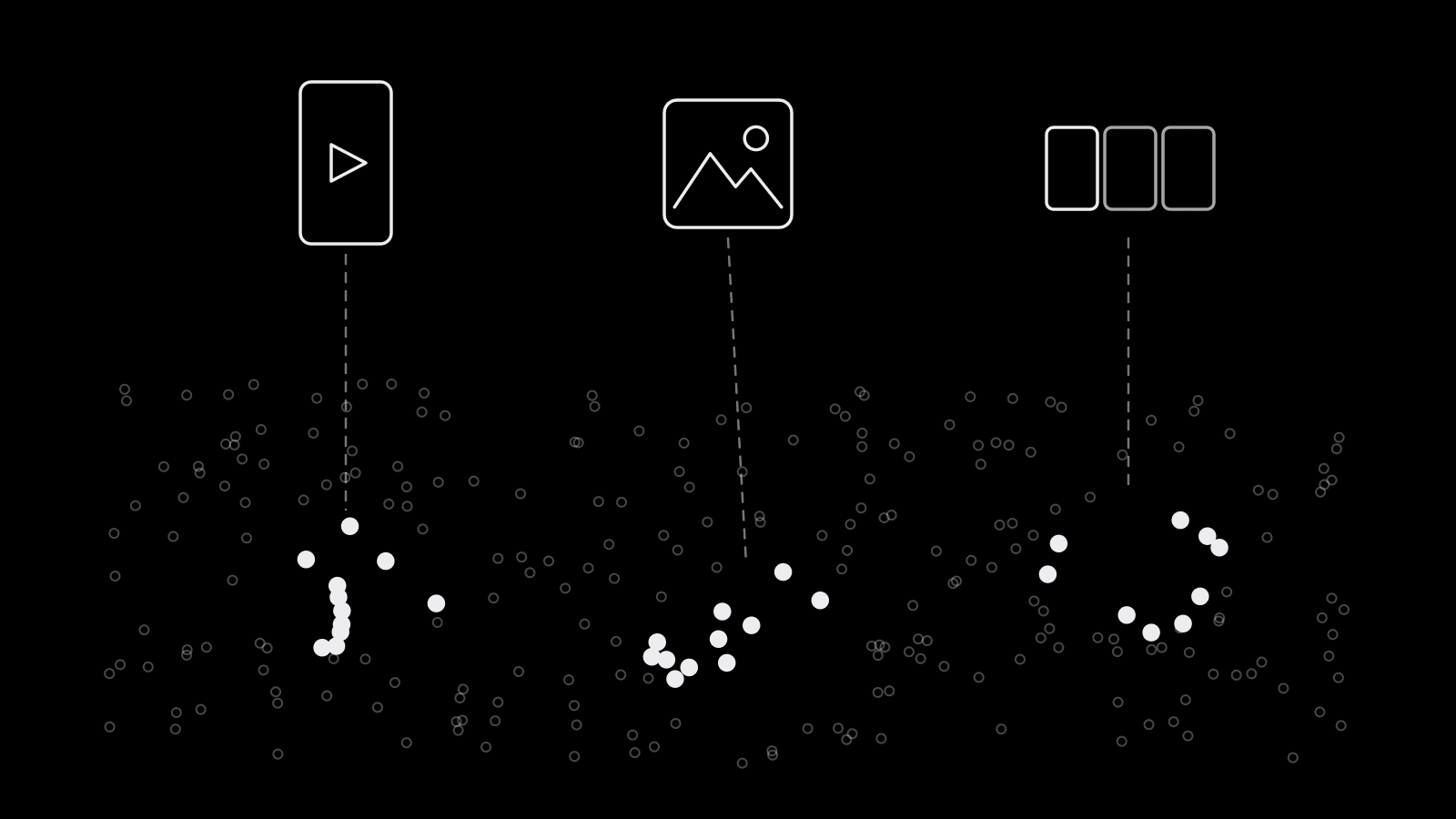
With delivery this open, the ad decides who sees it. The system watches who stops, clicks and converts on each ad, then finds more people like them. A drill ad opening on a dad in a garage finds a different buyer from the same drill in a minimalist apartment, even inside one broad ad set.
That changes how you plan:
- Brief for personas, not for audiences. Instead of an ad set per persona, make ads per persona: different hooks, faces, settings, pain points. See the creative brief template for how to spell that out.
- Vary the concept, not only the edit. Ten color variants of one video all reach the same people. Distinct angles reach distinct pockets of the market.
- Read breakdowns. Age, gender and placement breakdowns per ad show who a creative actually reaches.
- Keep testing structured. A dedicated creative testing setup tells you which angle opens which audience without disturbing your scaling ad sets.
A practical 2026 setup
For most ecommerce and lead-gen accounts with reasonable data:
- One prospecting campaign, Advantage+ audience, audience controls for location, minimum age and existing-customer exclusions where that fits your goal.
- No suggestions, or one: your best customer list or a value-based lookalike.
- Several distinct creative concepts per ad set, rotated in on a schedule before creative fatigue sets in.
- A small holdout test (broad vs. broad plus suggestion) every quarter, judged on cost per result at the same attribution setting. Accounts differ, so let your own numbers settle it.
Frequently asked questions
Is broad targeting better than lookalike audiences on Facebook?
For most accounts with steady conversion data, broad targeting under Advantage+ audience performs as well as or better than lookalikes, because the delivery system already has richer signal than a lookalike seed. Lookalikes still help new accounts, long sales cycles and high-value seed lists. Test both in your own account before deciding.
Do lookalike audiences still work in 2026?
Yes, but mostly as audience suggestions. With Advantage+ audience on, Meta starts with the lookalike and expands beyond it when it predicts better results. They behave as hard targeting only under original audience options, and even there Meta may expand them for some performance goals.
What is the difference between audience controls and audience suggestions?
Audience controls are hard limits such as location, minimum age, exclusions and language, and Meta will not deliver outside them. Audience suggestions such as interests, age ranges, custom audiences and lookalikes are starting points that Meta can go beyond.
How many ad sets should I run with broad targeting?
As few as your budget allows each one to collect roughly 50 optimization events a week. For many accounts that means one or two prospecting ad sets, with variety coming from the ads inside them.
When the creative is the targeting, the team that ships more distinct concepts wins. upload.ad takes approved creatives from review straight into your Meta and TikTok ad accounts in one batch. Start free.
Veikka Grundström, Founder
I build upload.ad, the creative library and review workflow media buying teams use to get ads from edit to live on Meta and TikTok. I write about the parts of that job that waste the most time: creative testing, platform specs, review approvals, and the API behaviour nobody documents properly.