Blog / · 6 min read
Advantage+ sales campaigns: what replaced Advantage+ shopping
 Veikka Grundström Founder, upload.ad
On this page
If you learned Advantage+ shopping campaigns (ASC) in 2023 or 2024, a lot of what you know is out of date. Meta folded ASC into Advantage+ sales campaigns in 2025, brought back ad sets, changed how the existing customer budget cap works, and turned "Advantage+" from a separate campaign type into a set of switches on the normal Sales objective.
Here is what changed, how to set one up today, how existing customers are defined and controlled, and when Advantage+ sales actually beats a manual build.
What changed when ASC became Advantage+ sales
The original Advantage+ shopping campaign, launched in 2022, was a separate campaign type with a fixed shape: one campaign, no ad sets you could structure, minimal targeting inputs, and a slider capping how much budget could go to existing customers.
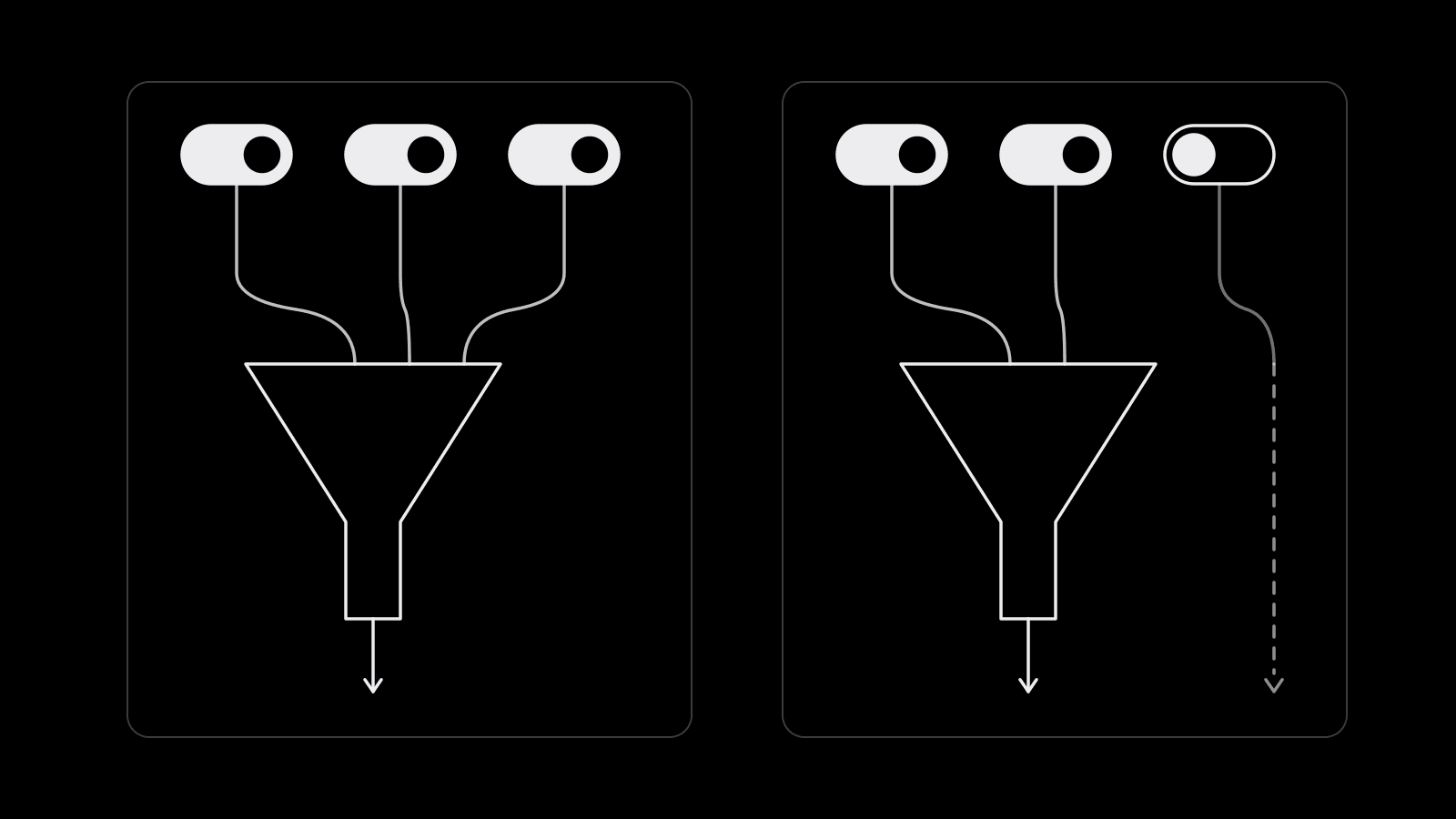
In early 2025 Meta replaced that with a unified setup. You pick the Sales objective, and the campaign starts with Advantage+ on. Whether a campaign counts as "Advantage+" now depends on which automations are left on:
| Lever | Advantage+ on | Switched off |
|---|---|---|
| Budget | Advantage+ campaign budget (CBO) | Ad set budgets |
| Audience | Advantage+ audience, inputs as suggestions | Original audience options |
| Placements | Advantage+ placements | Manual placements |
With all three on, Ads Manager labels it an Advantage+ sales campaign. Turn any one off and it becomes a manual sales campaign that still uses whichever Advantage+ features you left on.
The practical differences from old ASC:
- Ad sets are back. You can split a campaign into ad sets by product line, offer, or creative type, each with its own ads and exclusions. Meta's standard limit of 50 ads per ad set applies.
- The existing customer budget cap was removed in the 2025 rollout (more on this below).
- Legacy ASC campaigns kept running, but new campaigns are built through the unified flow. Older guides and API integrations that assume the separate ASC type are out of date.
How to set up an Advantage+ sales campaign
- Choose the Sales objective and leave Advantage+ on at the campaign level.
- Set the budget and goal. Pick a daily or lifetime campaign budget and a bid strategy: highest volume, cost per result goal, or ROAS goal. Start without a cap or goal unless you have enough conversion history to know what is realistic; see Facebook bid strategies.
- Set the conversion event. Purchase, with a pixel and Conversions API setup you trust. Automation only optimizes as well as the signal it receives.
- Set audience controls. These are hard limits: locations, minimum age, languages, and excluded custom audiences. Everything else you add (custom audiences, lookalikes, interests, age ranges, gender) is a suggestion that Meta can go beyond.
- Load creative volume. Automation needs variety to work with. Aim for several genuinely different concepts per ad set, not five crops of the same video. Catalog ads work well here if you sell many SKUs.
- Leave it alone for the first week. The learning phase rules still apply: roughly 50 optimization events in 7 days per ad set, and big edits restart the clock.
Existing customers: definitions, the budget cap, and exclusions
This is the part that changed the most, and the part that matters most for ecommerce accounts with a big customer file.
Defining existing customers
In your ad account's advertising settings, under audience segments, you tell Meta which custom audiences count as your existing customers (for example, a purchaser list or a CRM upload) and which count as your engaged audience (site visitors, social engagers). Meta uses these definitions in reporting, so you can break results down by new audience, engaged audience, and existing customers.
Keep these lists fresh. A stale customer list makes "new customer" results look better than they are.
The existing customer budget cap
Old ASC let you cap the share of budget spent on existing customers (for example, 20%). Meta removed that cap when it introduced Advantage+ sales campaigns in 2025. Third-party reports in 2026 disagree on whether a version of it has returned, and availability may differ by account, so check what your own campaign setup shows before relying on it.
Excluding existing customers instead
The dependable control is an exclusion. Add your customer custom audiences to the excluded audiences in audience controls, and that ad set will not spend on them. This is the equivalent of the old cap set to 0%, and it is the right setup for a pure prospecting campaign.
Without some control, automation tends to find the cheapest purchases, which are often people who were going to buy again anyway. Check the audience segment breakdown after the first week. If a large share of purchases comes from existing customers, your reported ROAS is flattering the campaign.
When Advantage+ sales beats a manual build
Advantage+ sales is not automatically better. It tends to win when the inputs it depends on are strong.
| Situation | Usually better choice |
|---|---|
| Healthy purchase volume, solid tracking, broad product appeal | Advantage+ sales |
| Large catalog, many SKUs | Advantage+ sales with catalog ads |
| Low purchase volume, new pixel | Manual, optimizing for a higher-volume event if needed |
| Strict new-customer acquisition target | Either, with customer exclusions set |
| Clean creative tests that need even spend | Manual, with ad set budgets |
| Regulated offers or special ad categories | Manual, with the restricted targeting rules |
The honest test is running both. Put a comparable budget into an Advantage+ sales campaign and your best manual structure for two to four weeks, judge on new-customer CPA or blended results rather than in-platform ROAS alone, and let the numbers decide. Many accounts end up with Advantage+ sales as the scaling engine and a separate manual campaign for creative testing.
Frequently asked questions
Are Advantage+ shopping campaigns still available?
Not as a separate campaign type for new builds. Meta replaced Advantage+ shopping campaigns with Advantage+ sales campaigns in 2025. Legacy ASC campaigns kept running, but new ones are created through the Sales objective with Advantage+ turned on.
What is the difference between Advantage+ sales and a manual sales campaign?
An Advantage+ sales campaign has Advantage+ campaign budget, Advantage+ audience, and Advantage+ placements all turned on. If you switch off any of those three, Meta treats it as a manual sales campaign that still uses the remaining automated features.
Can you exclude existing customers from Advantage+ sales campaigns?
Yes. Add your customer custom audiences as excluded audiences in the audience controls. Exclusions are hard limits, so the ad set will not deliver to those people. This is the most reliable way to keep a campaign focused on new customers.
How much budget do Advantage+ sales campaigns need?
Enough to generate roughly 50 purchases per ad set in a 7-day window so the ad set can exit learning. At a $40 CPA that is about $285 a day per ad set. Below that, the campaign still runs but optimizes on thinner signal.
Does Advantage+ sales still have a 150 ad limit?
The old ASC limit of 150 ads per campaign belonged to its single-ad-set structure. Advantage+ sales campaigns use ad sets, and Meta's standard limit of 50 ads per ad set applies.
Automated campaigns are only as good as the creative you feed them. upload.ad keeps your creative library, reviews, and bulk uploads into Meta and TikTok in one place. Start free.
Veikka Grundström, Founder
I build upload.ad, the creative library and review workflow media buying teams use to get ads from edit to live on Meta and TikTok. I write about the parts of that job that waste the most time: creative testing, platform specs, review approvals, and the API behaviour nobody documents properly.