Blog / · 7 min read
Ad creative brief template for performance teams
 Veikka Grundström Founder, upload.ad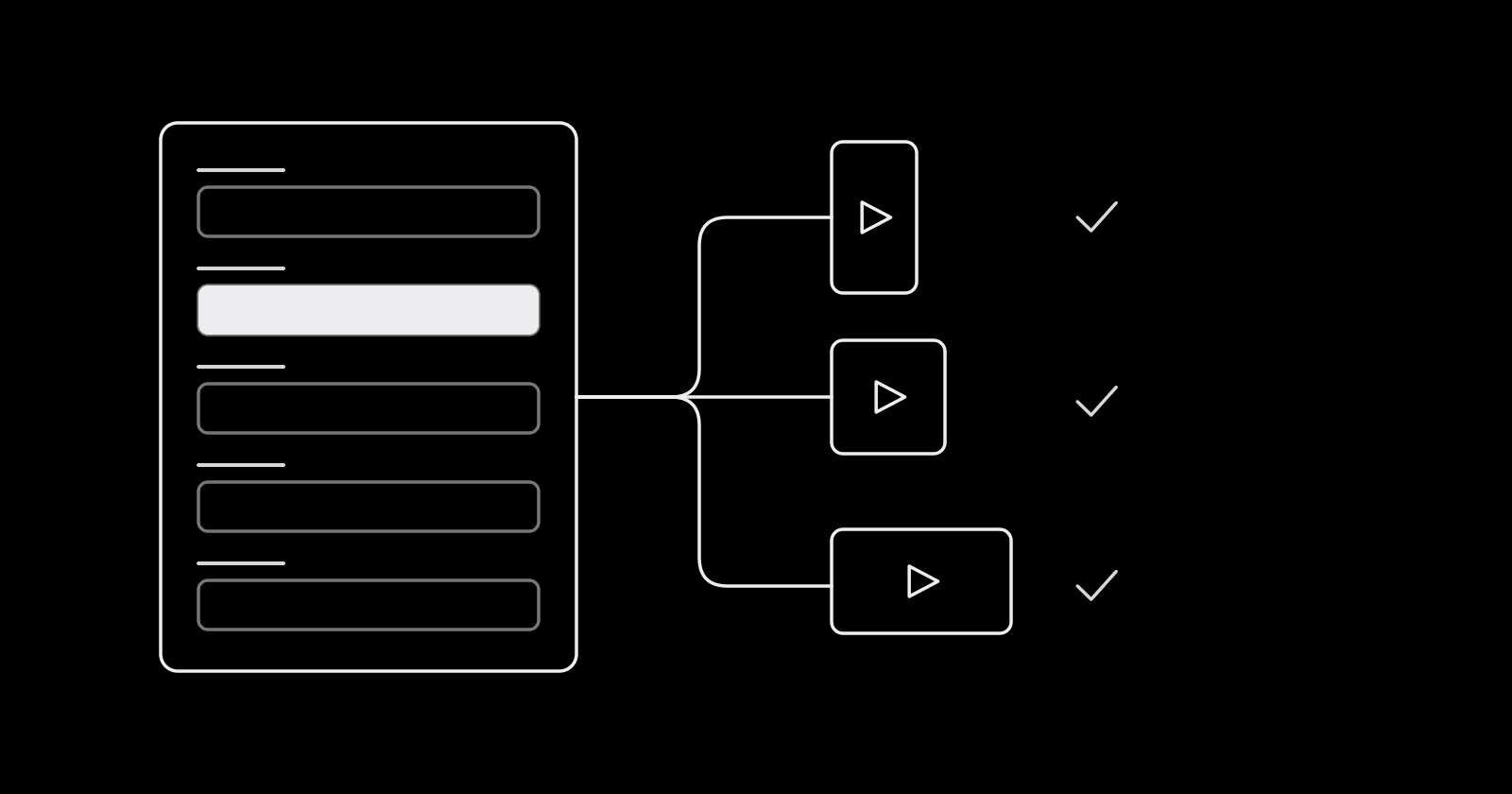
On this page
Most ad creative briefs fail before anyone opens an editor. They say "make something fun for our summer sale," the editor guesses, the first round comes back wrong, and two review cycles later the team ships a compromise nobody would have briefed on purpose. A performance brief exists to remove the guessing: one page that tells the maker what to test, who it is for, and what "done" looks like.
Here is what a performance creative brief needs, a template you can paste into your doc tool today, and the failure modes that make briefs useless.
What makes a performance brief different
A brand brief describes a feeling. A performance brief describes a test. Every ad you launch on Meta or TikTok is an experiment, and the brief is where the hypothesis gets written down. If the ad wins, the brief tells you why it won so you can make more of it. If it loses, the brief tells you which variable to change next.
That means three things have to be explicit that brand briefs usually leave vague:
- The single variable being tested. A new angle, a new hook, a new format. Not all three at once.
- The audience's starting point. Someone who has never heard of you needs a different ad than someone who abandoned a cart yesterday.
- The deliverables, down to file names. Aspect ratios, lengths, and naming so assets can go straight into the account without a rename pass.
If you are briefing outside creators rather than an in-house editor, the UGC ads guide covers the creator-specific parts (scripts versus talking points, usage rights, raw footage). This post is the internal brief that sits upstream of all of it.
The fields a creative brief needs
| Field | What goes in it | Why it matters |
|---|---|---|
| Concept | One sentence describing the idea | Forces the team to agree on what the ad is before production |
| Angle | The reason to buy you are leaning on (price, speed, social proof, a pain point) | This is usually the variable being tested |
| Audience | Who sees it and how aware they are of the product | Sets tone, how much to explain, and whether to lead with the problem or the product |
| Hook options | 3 to 5 opening lines or first frames | The first seconds decide whether anyone sees the rest; see hook rate and hold rate |
| Format and specs | Video or static, length, aspect ratios, placements | Prevents re-exports and cropped captions |
| Proof | Reviews, numbers, demos, press, before and after | Claims without proof read as ads; also flags what legal needs to check |
| CTA | The one action you want and the words for it | Keeps the ending consistent with the landing page |
| References | Links to 2 to 4 existing ads, yours or competitors' | Shows tone and pacing faster than any description |
| Mandatories and no-gos | Logo rules, required disclaimers, banned claims | Stops rejections and review loops before they start |
| Deliverables and naming | Count of variations, file names, due date | Assets arrive ready to upload and easy to report on |
Two fields deserve more detail.
Angle versus concept
The concept is the execution ("a customer unboxing on their kitchen counter"). The angle is the argument ("it arrives faster than the store could get it to you"). Teams that confuse the two end up testing ten concepts that all make the same argument, then conclude the product has hit a ceiling. When you plan a round of creative testing, vary angles first, then concepts within the winning angle.
Hook options
Ask for more hooks than you need. Recording three alternative openings on the same body costs little extra, and swapping the first seconds is the cheapest test in paid social. Write them as the literal words on screen or spoken, not as descriptions like "something attention-grabbing."
Copy-pasteable creative brief template
Paste this into a doc, one brief per concept. Keep it to a page.
CREATIVE BRIEF: [Brand] / [Concept name] / [Date]

Owner:            [media buyer or strategist]
Maker:            [editor, designer, or creator]
Due:              [date]
Platforms:        [Meta / TikTok / both]

1. CONCEPT
   One sentence: [what the viewer sees]

2. ANGLE (the variable under test)
   [The single reason to buy this ad argues]
   Hypothesis: [If we lead with X, then Y will improve, because Z]

3. AUDIENCE
   Who: [description, not a targeting setting]
   Awareness: [unaware / problem aware / product aware / ready to buy]
   What they believe now: [the objection or assumption to overcome]

4. HOOK OPTIONS (first 1 to 3 seconds)
   A: [exact words or first frame]
   B: [exact words or first frame]
   C: [exact words or first frame]

5. BODY
   Beats: [problem, product, proof, payoff, in order]
   Talking points or script: [link or bullets]

6. PROOF
   [Reviews, numbers, demos to show. Source for every claim.]

7. CTA
   Action: [shop, sign up, download, get a quote]
   On-screen or spoken line: [exact words]
   Landing page: [URL]

8. FORMAT AND SPECS
   Type: [video / static / carousel]
   Length: [seconds]
   Aspect ratios: [9:16, 4:5, 1:1]
   Captions: [burned in / platform captions]
   Safe zones: [keep text clear of platform UI]

9. REFERENCES
   [2 to 4 links with a note on what to copy from each]

10. MANDATORIES AND NO-GOS
   [Logo, disclaimers, claims legal has not approved, competitor mentions]

11. DELIVERABLES AND NAMING
   Count: [e.g. 3 hooks x 2 ratios = 6 files]
   File names: [brand_concept_angle_hookA_9x16_v1]
For the specs section, check the current requirements per placement in the Facebook ad specs and TikTok creative specs guides rather than copying numbers from an old brief. For file names, use the same scheme your ads use so reports can group by angle and hook later; ad naming conventions walks through one.
Common failure modes
- Testing everything at once. New angle, new creator, new format, new offer. If it wins, nobody knows why; if it loses, nobody knows what to fix.
- Describing the audience as targeting settings. "Women 25 to 44, interest in yoga" tells an editor nothing. Describe what the person believes and what they are skeptical about.
- Hooks written as adjectives. "Scroll-stopping opener" is not a hook. Write the words.
- Claims with no source. Unsupported claims either get cut in review or get the ad rejected by the platform. Put the source next to the claim in the brief.
- Specs left to the editor. One missing 9:16 export means a placement runs a cropped version or no version at all.
- No naming. Assets named
final_v3_REAL.mp4become impossible to report on by angle, which is the whole point of briefing by angle. - No link back to results. The brief for the next round should cite what the last round showed. Keep briefs next to their performance so the history survives staff changes.
Frequently asked questions
What should be included in an ad creative brief?
A performance creative brief should include the concept, the angle being tested, the target audience and their awareness level, several hook options, format and specs, proof points, the call to action, reference ads, mandatories, and the deliverables with file names. Each field removes a decision the maker would otherwise guess at.
How long should a creative brief be?
One page per concept is a good ceiling. If a brief runs longer, it is usually covering several concepts or several variables at once, and should be split into separate briefs so each one tests a single idea.
What is the difference between a creative brief and a creator brief?
A creative brief is the internal document that defines what to test and why. A creator brief is the version sent to an outside creator, adding practical details like talking points, filming guidance, usage rights, and payment terms. The creator brief is derived from the creative brief.
How many hook variations should a brief ask for?
Three to five is a practical range. Alternate openings on the same body are cheap to produce and are one of the fastest variables to test, since the first seconds decide how many people watch the rest.
When the brief, the files, and the feedback live in one place, it is easier to see which angles won and brief the next round from that. upload.ad keeps your team's creatives, review threads, and ad results together for Meta and TikTok. Start free.
Veikka Grundström, Founder
I build upload.ad, the creative library and review workflow media buying teams use to get ads from edit to live on Meta and TikTok. I write about the parts of that job that waste the most time: creative testing, platform specs, review approvals, and the API behaviour nobody documents properly.