Blog / · 7 min read
Hook rate and hold rate: formulas, setup, and benchmarks
 Veikka Grundström Founder, upload.ad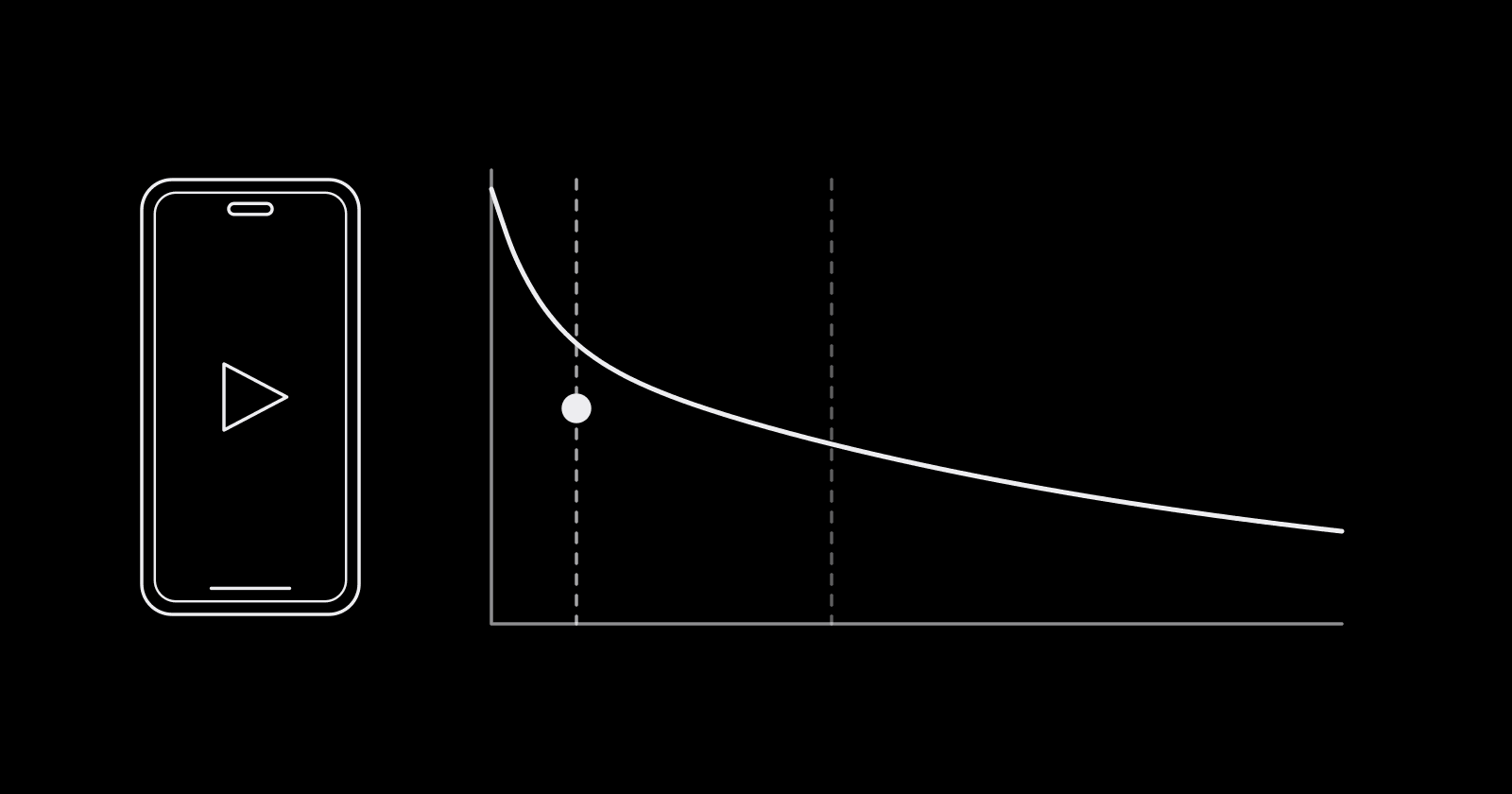
On this page
A video ad with a bad CPA can fail in three places: nobody stopped scrolling, people stopped but left before the point landed, or they watched it all and the offer did not convince them. CTR and CPA lump those together. Hook rate and hold rate split them apart, so you know whether to rewrite the first second, recut the middle, or fix the landing page.
Neither metric exists as a default column in Ads Manager. You build them from video metrics Meta and TikTok already report, which takes about five minutes and pays back on every creative review after that.
The formulas
Hook rate (also called thumbstop ratio) measures how many impressions turned into a real first look:
Hook rate = 3-second video plays / impressions
Hold rate measures how many of those viewers stayed for the body of the ad:
Hold rate = ThruPlays / 3-second video plays
A ThruPlay is Meta's standard view event: a play of at least 15 seconds, or to completion if the video is shorter than 15 seconds. Some buyers prefer "video plays at 50%" or "video plays at 75%" as the numerator for hold rate, which works better when you compare videos of very different lengths. Pick one definition per account and keep it, because switching makes old and new numbers incomparable.
| Metric | Meta formula | TikTok formula |
|---|---|---|
| Hook rate | 3-second video plays / impressions | 2-second video views / impressions |
| Hold rate | ThruPlays / 3-second video plays | 6-second video views / 2-second views |
| Deep hold (optional) | Video plays at 75% / 3-second video plays | Video views at 75% / 2-second views |
| Post-view intent | Outbound CTR (or link CTR) | CTR (destination) |
TikTok equivalents
TikTok reports 2-second video views (plays of at least 2 seconds in one impression, replays not counted) and 6-second video views (at least 6 seconds, watched in full if shorter, or an engagement within the first 6 seconds). The 6-second definition matches TikTok's Focused View, which is what the video views objective optimizes for.
Because TikTok's windows are shorter, the numbers are not directly comparable with Meta's. A 2-second view is an easier bar than a 3-second play, and a 6-second view is a much easier bar than a 15-second ThruPlay. Benchmark each platform against itself.
Setting up the custom metrics
Meta Ads Manager
- Open Columns, then Customize columns.
- Choose Create custom metric.
- Name it "Hook rate", build the formula
3-second video plays / Impressions, and set the format to percentage. - Create a second metric, "Hold rate", as
ThruPlays / 3-second video plays, also as a percentage. - Add both to a saved column preset alongside spend, outbound CTR, CPA, and ROAS, and view it at the ad level.
Custom metrics are saved to the ad account, so the whole team works from one definition instead of arguing about math in creative reviews.
TikTok Ads Manager
TikTok's custom metrics support is more limited and has changed over time. If you cannot create a calculated column in your account, export the ad-level report with impressions, 2-second views, 6-second views, and video completion metrics, and calculate the ratios in a spreadsheet. Check TikTok Ads Manager's current reporting options before building a workflow around either approach.
Diagnosing hook, body, and offer
The point of splitting the funnel is that each stage has a different fix. Read the metrics in order and stop at the first one that is clearly weak.
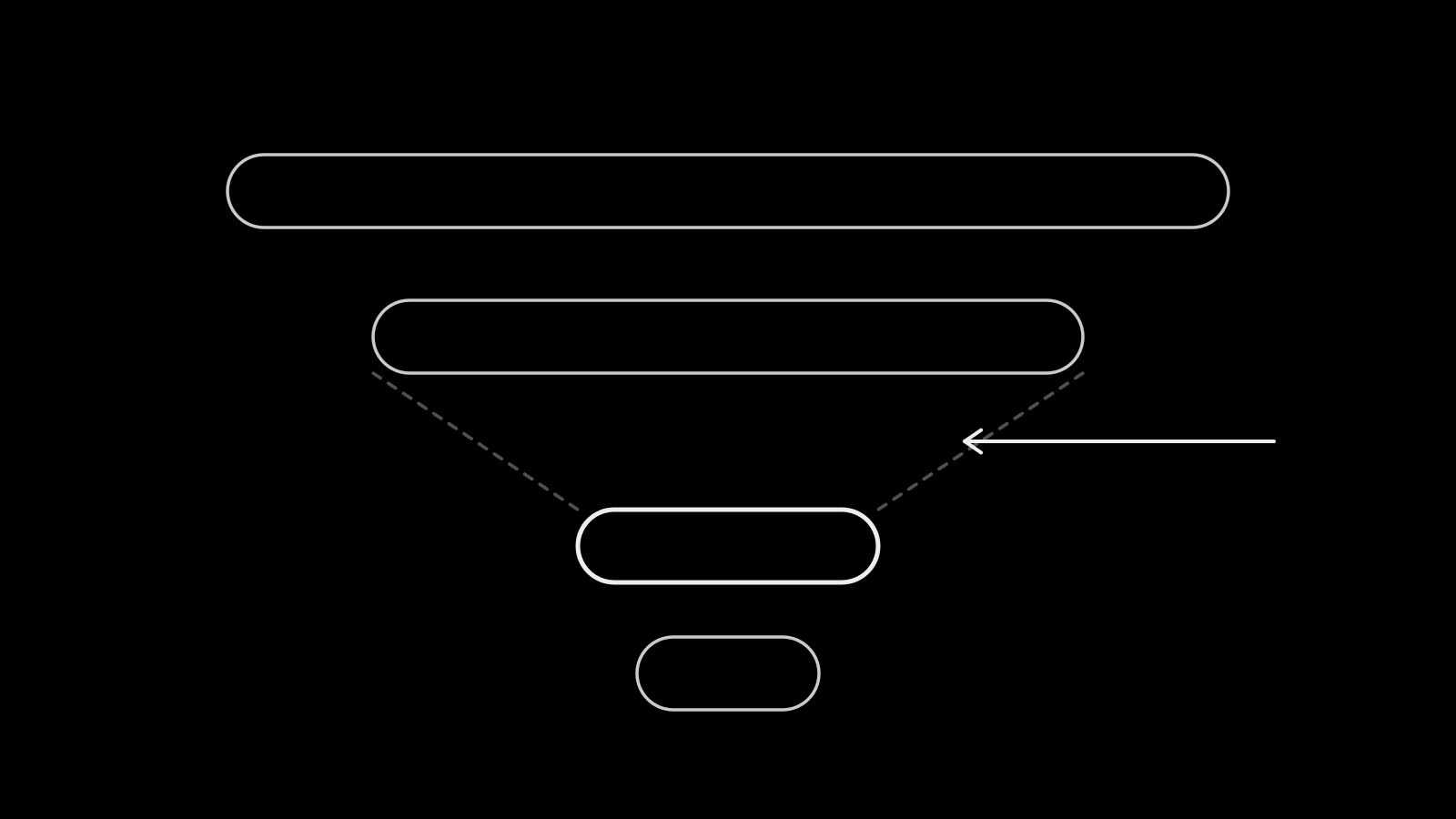
- Low hook rate, anything else: the first second is the problem. People never saw your message. Test new openers on the same body: a different first frame, text on screen from frame one, a face or a product in motion, a spoken question. This is the cheapest test in advertising because you reuse 90% of the edit.
- Good hook, low hold: the opener earned attention the body did not keep. Common causes are a slow second beat, a hook that promises something the video does not deliver, or a talking head that loses energy. Cut faster, move the payoff earlier, or trim the video.
- Good hook, good hold, weak CTR: people watched and did not act. Look at the call to action, whether the offer is clear, and whether the ad ever says what to do next.
- Strong CTR, weak CPA: the ad did its job. The problem is post-click: landing page speed, price, the checkout, or a mismatch between ad promise and page.
A useful pattern: when one body performs, cut three to five new hooks onto it before shooting anything new. When one hook performs, try it on other bodies. Hooks and bodies are separate assets, and tracking them separately is what these metrics are for.
Typical ranges, honestly framed
There is no published official benchmark for hook rate or hold rate, and the numbers shift with placement mix, audience, vertical, and video length. Reels and Stories inventory tends to show different view-rate behavior than Feed. With that caveat, many media buyers work with rough ranges like these for Meta prospecting:
| Metric | Weak | Workable | Strong |
|---|---|---|---|
| Hook rate | under about 20% | about 20% to 30% | above about 30% |
| Hold rate | under about 10% | about 10% to 20% | above about 20% |
Treat these as starting points, then replace them with your own account's medians after a few weeks of testing. The most useful comparison is always relative: this new creative against your last twenty creatives in the same campaign, same placements, same audience.
Two traps to watch for. First, hook rate on a video under 3 seconds is meaningless, because every play is a full view. Second, a high hook rate from a clickbait opener can look great and then collapse at hold and CTR. Hook rate is a diagnostic, never the goal; the goal is still the CPA or ROAS you are optimizing for. If you are running creative tests, use these metrics to decide what to iterate, and use cost per result to decide what wins.
Where the metrics fit in a testing loop
Hook and hold rates stabilize faster than CPA, because they need hundreds of impressions rather than dozens of conversions. That makes them useful early signals: a creative with a hook rate far below your account median after a few thousand impressions rarely recovers. They also help you spot creative fatigue early, since hook rate often slides as frequency climbs, before CPA moves.
They do not replace judging on outcomes. A video with a modest hook rate that speaks to exactly the right buyer can beat a viral-looking opener. Use them to explain results and choose the next edit.
Frequently asked questions
What is a good hook rate on Facebook ads?
There is no official benchmark, and it varies by placement, audience, and vertical. Many media buyers treat roughly 20% to 30% (3-second video plays divided by impressions) as workable for Meta prospecting and above about 30% as strong. Compare against your own account median first.
How do you calculate thumbstop ratio?
Divide 3-second video plays by impressions. On TikTok, use 2-second video views divided by impressions. Thumbstop ratio and hook rate are the same metric under two names.
What is hold rate in Facebook ads?
Hold rate is the share of people who stopped on your video that kept watching. The common formula is ThruPlays divided by 3-second video plays, where a ThruPlay is a play of at least 15 seconds or to completion for shorter videos.
How do I add hook rate to Ads Manager?
Go to Columns, Customize columns, Create custom metric, and build the formula 3-second video plays divided by impressions, formatted as a percentage. Save it to a column preset so it shows up for the whole team.
Is hook rate or CTR more important?
CPA or ROAS matters most. Hook rate tells you whether the opener works, CTR tells you whether the ad drove action. Use hook rate to diagnose where a creative loses people, and outcome metrics to decide which creative wins.
Testing hooks is a volume game: new openers on proven bodies, every week. upload.ad keeps every cut reviewed, versioned, and uploaded to Meta and TikTok in one pass. Start free.
Veikka Grundström, Founder
I build upload.ad, the creative library and review workflow media buying teams use to get ads from edit to live on Meta and TikTok. I write about the parts of that job that waste the most time: creative testing, platform specs, review approvals, and the API behaviour nobody documents properly.