Blog / · 6 min read
Facebook ads frequency: what is a good number in 2026?
 Veikka Grundström Founder, upload.ad
On this page
Frequency is the one number in Ads Manager that tells you how hard you are leaning on the same people. Ignore it and you find out about saturation from CPA, a week late. Obsess over it and you kill ads that were still working fine at a frequency that looked scary on paper.
Here is what frequency actually measures, what counts as a good number for different campaign types, how true frequency caps work on Meta, and how to tell healthy repetition from creative fatigue.
What frequency measures
Frequency is impressions divided by reach: the average number of times each person who saw your ad saw it. An ad set with 50,000 impressions and 20,000 people reached has a frequency of 2.5.
Two details trip people up:
- It is an average. A frequency of 3 can mean everyone saw the ad three times, or most people saw it once while a small slice saw it ten times. The tail is where annoyance and wasted spend live.
- It depends on the date range. Reach is deduplicated across the window you select, so frequency over 30 days is always higher than over 7 days for the same ad set. Compare like with like: pick one window (7 days is the most useful for ongoing campaigns) and stick with it.
What is a good frequency for Facebook ads?
There is no universal number, because the right frequency depends on how big the audience is, how warm it is, and what you are asking people to do. These are the working ranges most media buyers use, measured over a 7-day window. Treat them as starting points that vary by vertical, offer, and creative, then calibrate against your own data.
| Campaign type | Typical healthy 7-day frequency | When to look closer |
|---|---|---|
| Broad prospecting (sales, leads) | about 1 to 2 | Climbing past 2.5 to 3 with CTR falling |
| Awareness and reach | about 1 to 3 | Above your chosen cap or target |
| Retargeting (site visitors, engagers) | about 3 to 6 | CPA rising while frequency keeps climbing |
| Small niche audiences, B2B | often 3+ by necessity | Reach flat for days while impressions grow |
Retargeting runs higher because the pool is small and warm. On a cold prospecting audience, high frequency usually means delivery has stopped finding new people.
The number that matters more than the level is the trend. A prospecting ad set sitting at 1.8 for weeks is fine. The same ad set going from 1.4 to 2.6 in ten days while reach flattens is telling you it has run out of room.
Frequency vs fatigue
High frequency and creative fatigue are related but not the same thing. Frequency is exposure. Fatigue is the response to exposure dropping off.
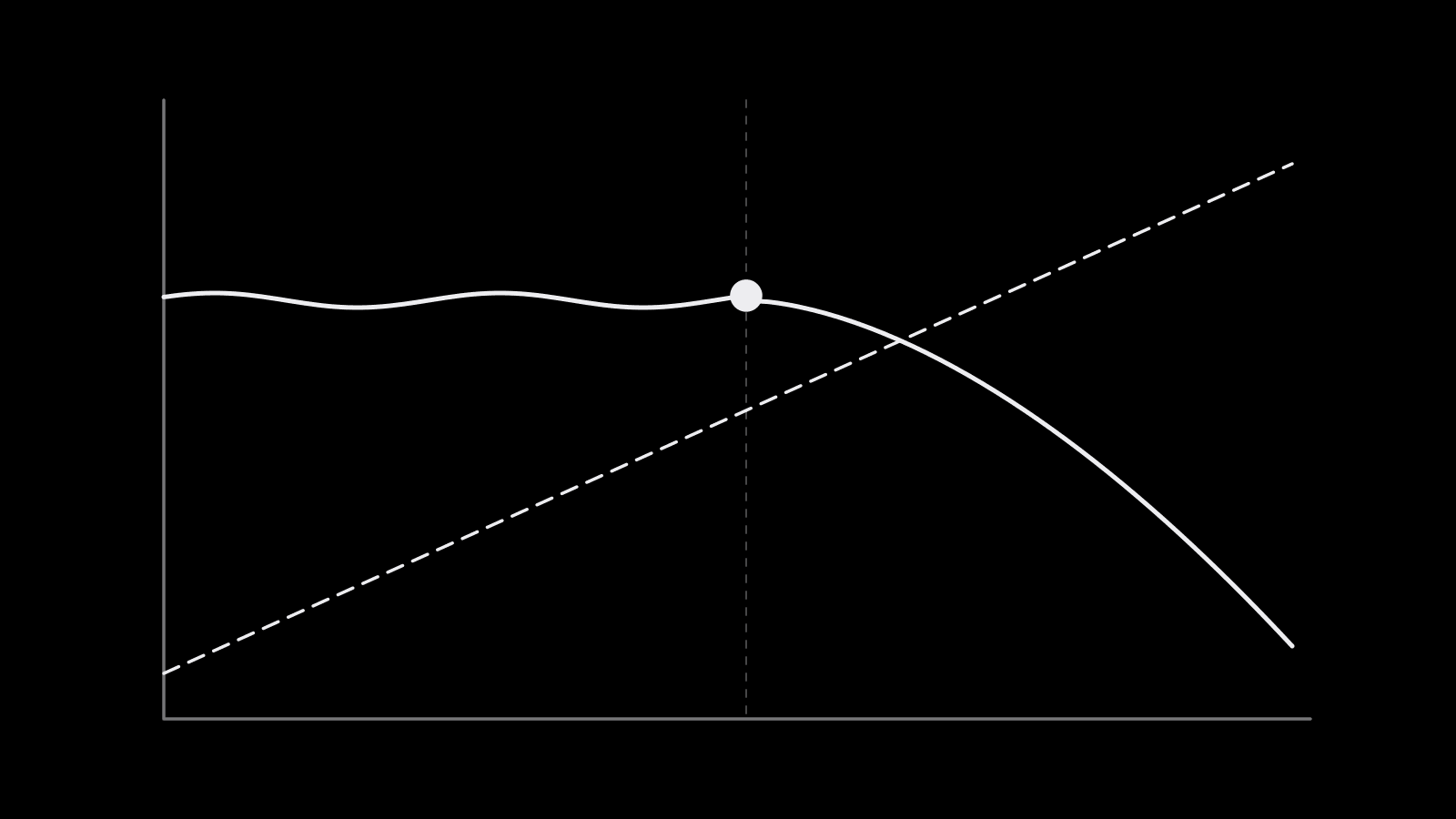
A strong creative can hold performance at a frequency of 4 or 5, and a weak one can fatigue at 1.5. So read frequency alongside the metrics that show response:
- Frequency rising, CTR and hook rate stable: repetition is still working. Leave it.
- Frequency rising, CTR falling from the ad's own baseline: early fatigue. Queue a refresh.
- Frequency rising, CTR falling, CPM rising: the auction is now discounting the ad for weaker engagement. Replace or iterate now.
- Frequency flat, performance falling: probably not fatigue. Look at seasonality, the offer, the landing page, or tracking gaps.
Always compare an ad against its own first-week numbers, not the account average.
Frequency caps on Meta
Most performance campaigns have no hard frequency cap, and that is by design. Sales and leads campaigns optimize for conversions, and Meta decides how often to show someone an ad based on how likely they are to convert. You control frequency indirectly, through audience size, budget, and creative volume.
True caps exist in two places.
Reservation (formerly reach and frequency)
Meta's Reservation buying type, which replaced the old "Reach and frequency" name in Ads Manager, lets you book reach in advance at a predictable price with a hard frequency cap. Meta's help center lists the default cap as 2 impressions every 7 days, and you can adjust it up or down. It is built for brand campaigns and has minimum audience and budget requirements.
Auction Awareness campaigns
Auction campaigns using the Awareness objective with reach optimization offer frequency controls at the ad set level:
- Frequency cap: a maximum number of impressions per person over a number of days (for example, 2 impressions every 7 days).
- Target frequency: an average weekly frequency Meta aims for. Some people will see the ad more than the target, since it is an average, not a ceiling. It has extra requirements, such as a lifetime budget and a minimum schedule length, and those have changed over time, so check what Ads Manager shows for your setup.
If you need a hard ceiling on a conversion campaign, there is no toggle for it. Your practical options are a bigger audience, more creatives in rotation, or a lower budget on that ad set.
How to bring frequency down without losing results
When frequency climbs on a performance campaign, work through these in order:
- Add new creative. More distinct ads in rotation spread impressions across more angles, and each person sees fewer repeats of any single one. This is the fix that usually works.
- Broaden the audience. Narrow interest stacks and small lookalikes saturate first. Broader targeting gives delivery new people to find; see broad targeting vs lookalikes.
- Consolidate overlapping ad sets. Several ad sets chasing the same people push up frequency and compete in the auction against each other.
- Check the budget-to-audience ratio. Spending $1,000 a day into a 200,000-person retargeting pool will saturate it quickly no matter how good the creative is.
- Exclude recent converters where it makes sense, so buyers are not seeing the same acquisition ad after they purchased.
Avoid fixing frequency by pausing ad sets on and off. Long pauses and big edits can push an ad set back into the learning phase.
Frequently asked questions
What is a good frequency for Facebook ads?
For broad prospecting, a 7-day frequency of about 1 to 2 is typical and healthy. Retargeting commonly runs about 3 to 6 because the audience is small and warm. These are rules of thumb that vary by vertical and creative, so judge frequency by its trend and by whether CTR is holding, not by a fixed number.
What does frequency mean in Facebook ads?
Frequency is the average number of times each person saw your ad in the selected date range, calculated as impressions divided by reach. Because it is an average, some people saw the ad far more often than the figure suggests.
Can you set a frequency cap on Facebook ads?
Yes, but only in some campaigns. The Reservation buying type (formerly reach and frequency) has a hard frequency cap, and auction Awareness campaigns with reach optimization offer a frequency cap or target frequency. Sales, leads, and other conversion campaigns have no frequency cap setting.
Is high frequency always bad?
No. If CTR, hook rate, and CPA are holding steady, the repetition is working. High frequency becomes a problem when it rises alongside falling engagement and rising costs, which is the signature of creative fatigue.
Keeping frequency healthy mostly comes down to getting fresh creative into the ad account before the current batch wears out. upload.ad gives your team one place to review creatives and push approved batches into Meta and TikTok. Start free.
Veikka Grundström, Founder
I build upload.ad, the creative library and review workflow media buying teams use to get ads from edit to live on Meta and TikTok. I write about the parts of that job that waste the most time: creative testing, platform specs, review approvals, and the API behaviour nobody documents properly.