Blog / · 6 min read
Static vs video ads: when each wins on Meta and TikTok
 Veikka Grundström Founder, upload.ad
On this page
"Should we be running more video?" comes up in every account review, usually after a static ad quietly outperformed three expensive shoots. The honest answer is that format is a variable to test, not a belief to hold, and the right mix depends heavily on which platform you are buying and what you are selling.
Here is when statics win, when video is worth the cost, how the two platforms differ, and how to test formats without fooling yourself.
What each format is good at
Static and video ads do different jobs. Treating them as better and worse versions of the same thing is where most format debates go wrong.
| Static (image) ads | Video ads | |
|---|---|---|
| Time to make | Hours | Days to weeks |
| Cost per concept | Low | Moderate to high |
| Message delivery | Instant, one frame | Unfolds over seconds |
| Best at | Clear offers, known products, retargeting, price and proof | Demonstration, story, education, new or complex products |
| Iteration speed | Very fast | Slower, but hooks can be swapped cheaply |
| Where it fits | Most Meta placements, TikTok only on specific placements | Every placement on both platforms |
The pattern practitioners see again and again: statics do best when the viewer already understands the product and needs a reason to act now. Video does best when the viewer needs to see something happen before they believe it.
When static ads win
Statics are not a budget fallback. They regularly beat video in these situations:
- Retargeting and warm audiences. People who visited the site already know the product. A clean image with the offer, a review, or a price usually closes faster than a 30-second story they have half seen.
- Offer-led promotions. Sales, bundles, free shipping thresholds, and deadlines read in one glance.
- Simple, visual products. If the product photo is the pitch (apparel, home goods, food), a strong image says it immediately.
- Proof formats. Review screenshots, before and after comparisons, press quotes, and "us vs them" charts often work better still than animated.
- Fast concept testing. You can test ten angles as statics in the time it takes to edit one video, then turn the winning angle into video.
That last point is underrated. Statics are the cheapest way to find out which message works. Video is often the better way to scale a message you have already proven.
When video is worth the cost
- The product needs demonstrating. Gadgets, apps, skincare texture, anything where "watch it work" is the argument.
- Cold audiences on TikTok, Reels, and Stories. These placements are built for full-screen vertical video and people are there to watch.
- Founder, creator, and UGC ads. A person talking to camera builds trust in a way an image cannot.
- Education and objection handling. Anything that takes more than one sentence to explain.
The real cost of video is not one shoot. It is the refresh rate. Video concepts fatigue like everything else, and an account that depends on video needs a production pipeline that keeps up. Cutting new hooks onto proven bodies is the cheapest way to extend a video's life, and hook rate and hold rate tell you which part is failing.
Format mix on Meta
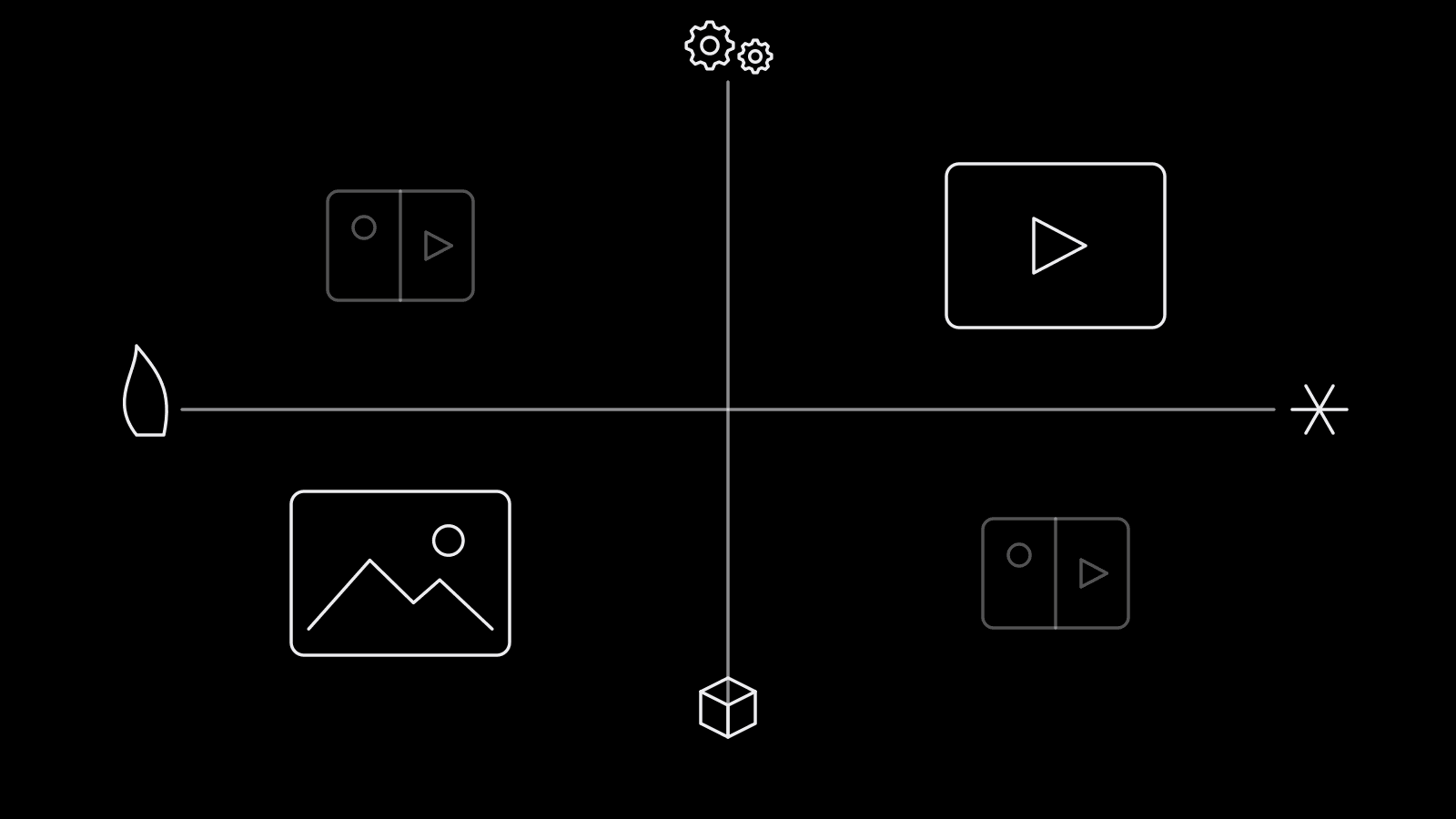
Meta is genuinely mixed-format. Images run in Facebook and Instagram Feed, Stories, Reels, Marketplace, search results, and Audience Network, alongside video. That means most Meta accounts should be running both, and letting delivery decide where each performs.
A few Meta-specific points:
- Put both formats in the same ad set when testing concepts, or use flexible ad format, which lets Meta pick the format per placement and person from the assets you give it.
- Size every asset for every placement. A square image cropped into a vertical Stories slot looks lazy. Facebook ad specs has the ratios.
- Watch the Advantage+ creative enhancements. Some can add motion or music to still images. That can help or hurt, so check what is turned on before judging "static" results.
- Carousels are their own format. Multiple images or videos in one ad are useful for catalogs and step-by-step stories, and should be tested as a separate format.
Format mix on TikTok
TikTok is video-first, and the For You feed is where the scale is. Single image ads do not run in the TikTok feed. According to TikTok's documentation, single image ads run on the Pangle (TikTok Ad Network) placement, which serves ads inside third-party apps, and on the Global App Bundle placement (apps like CapCut) in the markets where that placement is available, which does not currently include the US.
Images can reach the TikTok feed in one way: carousel ads, which show several images in sequence with music, and are available for objectives like traffic, website conversions, app promotion, lead generation, and reach. They must be built in a non-Smart+ campaign.
So for TikTok the practical guidance is:
- Treat vertical video as the default for the main feed. See TikTok ads creative specs.
- Use carousels for products that suit a swipeable photo sequence.
- Use single image ads only if Pangle traffic makes sense for your goal, and judge it separately since the audience and intent differ from the TikTok app itself.
How to test static against video fairly
Format tests go wrong in predictable ways. To get a result you can trust:
- Test the same message in both formats. A great static against a weak video tells you about the concepts, not the formats.
- Judge on the business metric, cost per purchase or lead, not CTR or CPM. Video often has cheaper reach and lower click rates, statics the opposite.
- Give each enough spend. Plan around one to three times your target CPA per creative before calling it, as covered in Meta ads creative testing.
- Segment by placement. A static that wins in Feed may lose in Reels. Breakdowns by placement show whether the format or the slot drove the result.
- Recheck over time. Winners change as creatives fatigue. The mix that worked last quarter is a hypothesis this quarter.
Frequently asked questions
Do video ads perform better than image ads?
Not by default. Video tends to win for cold audiences and products that need demonstrating, while static images often win for retargeting, clear offers, and simple products. The only reliable answer for your account is a fair test of the same message in both formats.
Are static ads still worth running on Facebook?
Yes. Images run across most Meta placements, cost far less to produce, and are the fastest way to test new angles. Many accounts find their best retargeting and offer ads are statics.
Can you run image ads on TikTok?
Single image ads run on TikTok's Pangle and Global App Bundle placements, not in the TikTok feed. To show images in the feed, use carousel ads, which play several images in sequence with music.
What is a good mix of static and video ads?
There is no fixed ratio. A common starting point is to test angles cheaply as statics, scale winners into video, and keep both running on Meta, while leaning heavily on video for TikTok. Let cost per result by format decide the mix.
Testing both formats well means shipping more creative, faster. upload.ad moves your approved images and videos into Meta and TikTok in one batch, ready for the next test. Start free.
Veikka Grundström, Founder
I build upload.ad, the creative library and review workflow media buying teams use to get ads from edit to live on Meta and TikTok. I write about the parts of that job that waste the most time: creative testing, platform specs, review approvals, and the API behaviour nobody documents properly.